


Differential Scanning Calorimeters
- Melting Temperature (Tm)
- Heat of Fusion
- Glass Transition (Tg)
- Crystallinity
Thermal Stability
- Oxidative Induction Time (OIT)
- Oxidative Onset Time (OOT)
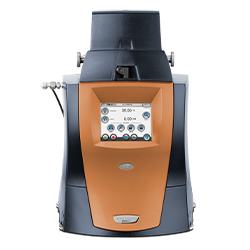
Dynamic Mechanical Analyzers
- Storage Modulus, Loss Modulus, Tan Delta
- Glass Transition (Tg)
- Storage Modulus, Loss Modulus, Tan Delta

Thermogravimetric Analyzers
- Decomposition Temperature
- Volatile or Solvent Content
- Filler Content (Residue)
- Decomposition Products
- Evolved Gas Analysis (EGA), TGA-MS, TGA-FTIR, TGA-GCMS
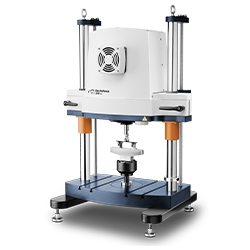
Mechanical Test Load Frames
- Young's Modulus, Yield Strength, Ultimate Strength, Elongation at Break
- Fatigue and Durability, S-N Curves
- Strength vs. Temperature
- Flexural, Bending or Crush Failure Points
- Fatigue and Durability, S-N Curves
- Strength vs. Temperature
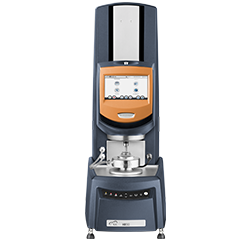
Discovery Hybrid Rheometers
- Viscosity Flow Curve
- Zero Shear Viscosity
- Viscoelastic Properties (Storage Modulus, Loss Modulus)
- Crossover Modulus and Frequency
- Extensional Viscosity
What is the processing temperature of this resin?
Understanding the temperatures at which polymers soften and melt is a fundamental material property relevant to polymer processing. As one of the first steps in extrusion, injection molding and film blow molding processes, resin pellets are routinely heated past the melting point; for thermoforming and blow molding, the resin is heated above its glass transition temperature to soften it, but without completely melting it. This transformation from a solid resin pellet (lower energy state) to a softened or completely melted pellet (higher energy state) requires the input of energy and can be measured using Differential Scanning Calorimetry (DSC).

In a DSC test, the heat flow of the sample is monitored as the temperature is increased at a constant rate. Thermal transitions such as melting and glass transition show up as endothermic events, where the material absorbs heat as it moves into the higher energy state. The results also reveal information about the polymer morphology, with clear differences between amorphous and semi-crystalline states. During a DSC test’s first heat cycle, amorphous materials display a broad glass transition without melting, while semi-crystalline polymers have a sharp and well-defined melting peak. Since the melting and glass transition temperatures are unique to each polymer, this information can be used to quickly evaluate the quality of the incoming feedstock prior to processing.
Answer the following questions with results from your DSC:
- Feedstock evaluation: Is this a neat polymer, or is it a blend? Can vendor A’s resin be replaced with lower cost resin from vendor B?
- Processing: How much thermal energy is needed to completely melt the resin pellets?
- After processing: Is there a thermal history after processing vs. as-received? (1st vs. 2nd heat)
- End-of-life recycling: Does this batch of PCR (post-consumer resin) have significant contamination from other polymers?
How does this resin decompose?
Common thermoplastic processing techniques, like extrusion, injection molding and blow molding, require the resin to be heated above the melting point for easy processing. However, it is important to carefully control the processing temperatures to avoid resin degradation that can occur at elevated temperatures. For polymers, the onset of degradation can be identified as the temperature at which significant weight loss (typically >5%) starts to take place and can measured using a Thermogravimetric Analyzer (TGA).

During thermal analysis of polymers, TGA tests are routinely performed before DSC testing since the TGA results help establish the upper temperature limits for subsequent testing. Apart from identifying the degradation window for processing, TGA results also quantitatively reveal the composition of the major ingredients in the resin, such as the amount of base polymer, plasticizer, and filler present. The off-gas generated during a TGA experiment can be further analyzed to gain insights into the chemical identity of the decomposition products. This type of Evolved Gas Analysis (EGA) is especially powerful since it combines real-time TGA data with results from FTIR and GC-MS.
Answer the following questions with results from your TGA:
- Feedstock evaluation: At what T does this resin decompose? What is the decomposition profile?
- Processing: Are there volatile materials in this batch of resin? Will there be off-gassing after processing?
- Failure Analysis: Is there a difference in the filler content or the decomposition profiles of the good vs. bad parts?
- End-of-life recycling: During pyrolysis, at what temperature does the maximum weight loss occur? What contaminants are presents in this batch of recycled resin?
Related Application Notes:
How stable is this resin during processing and end-use?
Stabilizers and other additives are often added to resins to prevent degradation from environmental effects encountered during processing and end-use conditions. These additives include antioxidants, oxygen scavengers, heat and UV light stabilizers, or flame retardants, to ensure the polymer’s intended properties are maintained during processing and the product’s lifetime. Stabilizers are inherently sacrificial and are gradually consumed when exposed to high temperature or UV light; once the stabilizer is completely exhausted, the polymer properties start to degrade rapidly.

The performance of stabilizers can be evaluated through Oxidative Induction Time (OIT) analysis on the DSC. In this isothermal test, the purge gas in the DSC is switched from Nitrogen to Oxygen, providing an environment where the stabilizer is consumed. At the onset of polymer degradation, the heat flow signal starts to increase and the time is noted as OIT.
Temperature ramps on the DSC can also be used to measure the Oxidative Onset Time (OOT), a related measure of polymer stability. Both OIT and OOT tests can also be performed using a high-pressure DSC, which reduces test time by accelerating stabilizer consumption.
Answer the following questions with OIT & OOT results from your DSC:
- Feedstock evaluation: Can this resin be processed as-is? Are antioxidants needed for additional stability?
- Failure Analysis: Did this part antioxidant at sufficient levels suitable for the end-use conditions?
- End-of-Life recycling: How much antioxidant is needed to stabilize and process this batch of PCR?
Related Application Notes:
How does this resin flow?
The viscosity and viscoelastic behavior of polymer melts plays an important role when processing polymers using injection molding and extrusion techniques. At a basic level, the viscosity represents the material’s internal resistance to flow – resins with higher viscosity flow slower and take more time to fill the mold, increasing the cycle time and introducing the possibility of defects like short shots. As a result, it is critical to measure and carefully control the viscosity of the resin to ensure process stability and eliminate batch-to-batch variations.

For polymer melts, the viscosity profile depends on the rate of deformation, also known as the shear rate. At the high shear rates encountered in the extrusion and injection molding processes, the viscosity curve displays a shear-thinning behavior in the power law region – as the shear rate increases, the viscosity decreases. This shear rate dependence is influenced by the polymer’s molecular weight distribution and degree of branching.
While high shear rates are relevant to processing conditions, viscosity measurements at low shear rates are essential for revealing the resin’s molecular structure. The zero shear viscosity in the first Newtonian plateau directly correlates with resin’s molecular weight, and can be measured using rotational rheometers.
How is viscoelasticity related to molecular weight / molecular weight distribution?
Oscillatory tests on rotational rheometers provide valuable insights into a polymer’s viscoelastic properties by probing the polymer’s structure through small deformations over a range of time scales. The results provide the polymer’s Storage Modulus (G’), Loss Modulus (G”) and complex viscosity (η*) as a function of the oscillation frequency and can be used to better understand the dynamics of polymer relaxation. These parameters are strongly influenced by resin’s molecular weight, molecular weight distribution, and long chain branching structure. Compared to melt flow indexers or capillary rheology, the viscoelastic profile from rotational rheology testing is particularly sensitive to the presence of high molecular weight contamination that can cause processing issues.

Answer the following questions with viscosity and viscoelastic measurements from your rotational rheometer:
- Feedstock evaluation: How is the viscoelastic profile affected by batch-to-batch changes in the resin’s Molecular Weight/ Molecular Weight Distribution?
- Processability: Does the resin have the right viscosity at all shear rates relevant to the manufacturing process?
- End-of-life: End-of-life recycling: How do contamination and MW variation in the recycled resin impact processing?
Related Application Note:
Does this resin possess sufficient melt strength for blow molding?
Manufacturing processes such as blow molding, film blowing, thermoforming and fiber spinning involve the application of an extensional deformation to polymer melts; the deformation process is comparable to a balloon or bubble gum being blown into a sphere. Successful products depend on the ability of the polymer melt to sustain large deformation without breaking or collapsing and can be quantitatively described by the extensional viscosity.

Compared to shear viscosity, extensional viscosity measurements are extremely sensitive to the molecular structure. Polymers with high degree of Long-Chain Branching (LCB) display a strain-hardening effect during elongational deformation, especially at increasing speeds. This behavior indicates a higher melt strength during extensional processes, which helps to stabilize a bubble and prevent collapsing, or avoid thin fibers breaking. Conversely, polymers with a linear morphology (no branching) often fail to process successfully.
This critical performance differentiation is not adequately detected by traditional flow measurements. Extensional viscosity measurements can be easily made on rotational rheometers using the Extensional Viscosity Accessory (EVA).
Answer the following questions with extensional viscosity measurements:
- Processability: What is the melt strength of this resin? How much stretching can the bubble withstand before it breaks?
- End-of-life: Do the processing parameters need to change for this batch with recycled resins? What additives are needed to process this batch of recycled resins into a film? (e.g., chain extenders)
How do process conditions affect the product’s crystallinity?
Semi-crystalline thermoplastics like Polyethylene (PE), Polypropylene (PP), and Polyethylene Terephthalate (PET) find extensive use across a range of applications, including in packaging materials. Semicrystalline polymer morphology is marked by the presence of locally ordered, crystalline regions interspersed between disorganized, amorphous regions. The presence of these crystalline domains within the structure confers desirable end-use properties including increased strength, wear performance, and chemical resistance. However, it is vital to carefully control the processing conditions to achieve the required levels of crystallinity in the product since high crystallinity can lead to brittle products, reduce optical clarity, or result in warpage and shrinkage defects.

Crystallization is the process of converting an amorphous, higher-energy structure into an organized, lower-energy, solid crystalline structure – this transition releases energy and can be accurately measured using Differential Scanning Calorimetry (DSC) as an exothermic peak. DSC tests are commonly performed in 3 distinct steps involving a heat-cool-heat cycle. The first heat cycle evaluates the material as received and imparts a uniform, well-defined thermal history to the materials.
Once melted, the cooling cycle of a DSC curve provides information about crystallization – the temperatures at which crystallization starts and ends, and a quick overview of crystallization kinetics. Additional insights into crystallization kinetics can be obtained through more detailed isothermal tests. The amount and speed of crystallization can be controlled through the deliberate addition of nucleating agents; however, crystallization rates can also be affected by dyes, colorants, or contaminants in recycled resins that can serve as nucleating agents. Since crystallinity has a direct impact on product performance, careful measurement and control of crystallinity is critical to avoid product failures in the end-use application.
Answer the following questions with results from your DSC:
- Processing: What cooling rates are needed to achieve the required crystallinity? Are nucleating agents needed?
- End-of-life: How can the crystallinity of products made with PCR be matched with those from virgin materials?
Related Application Notes:
How does the product perform?
Understanding the product performance under final end-use application conditions helps guide product formulation, process optimization, and plays an important role in troubleshooting and failure analysis. For plastic products, the mechanical properties are closely tied to the end-use product performance and can be evaluated through a combination of different mechanical testing techniques that provide information on the material’s modulus. Depending on the type of deformation, additional information and insights can also be obtained.
- Monotonic testing: Unidirectional deformation to failure under an applied load – test materials under conditions of increasing load (e.g., Stress-strain curves
- Fatigue testing: Understand damage and failure from repeated loading – test materials and finished products under conditions of increasing cycling (e.g., S/N curves)
- Dynamic Mechanical Analysis (DMA): Study solid viscoelastic properties as a function of temperature and deformation frequency (e.g., Glass transition temperature (Tg), Time-Temperature Superposition (TTS))

DMA testing investigates the temperature dependance of a solid specimen’s mechanical properties under bending, compression, or tensile deformation. It provides quantitative information about the material’s viscoelastic properties through the Storage Modulus (E’), Loss Modulus (E”) and tan(δ) (damping factor). When polymeric specimens are heated, they undergo transitions that are reflected in these mechanical parameters. DMA is one of the most sensitive techniques available to measure glass transition and beta transition temperatures, since it picks up on subtle changes in local polymer mobility brought about by the increased temperature.
Answer the following questions with results from your DMA:
- Processing: Was this batch of resins blended uniformly to achieve miscibility?
- Product performance: Does this product have the right mechanical strength/ stiffness for the intended end-use environmental conditions (temperature, relative humidity)?
- End-of-life: Do products produced with recycle resin match the mechanical properties of those made with virgin resins?
Related Application Notes:

Essential Polymer Material Analysis Techniques for Scientists, Researchers, and Engineers

Understanding Biopolymer Behavior

How to Ensure Polymer Strength and Durability with Mechanical Testing

Sustainable Polymers Brochure

Engineering a Greener Approach to Polymers
Differential Scanning Calorimeters

Thermogravimetric Analyzers
Dynamic Mechanical Analyzers

Discovery Hybrid Rheometers
ElectroForce Load Frames

- X3 DSC: The X3 DSC is ideal for high-throughput labs that require rapid analysis of multiple samples. With its advanced automation and high sensitivity, it’s perfect for large-scale polymer production where efficiency is key.
- DSC 2500: The DSC 2500 offers exceptional baseline stability and sensitivity, making it a great choice for research and development environments. It’s designed for detailed thermal analysis, helping manufacturers fine-tune material properties.
- DSC 250: This model strikes a balance between performance and cost, providing reliable results for routine quality control and general polymer testing. It’s suitable for manufacturers who need dependable thermal data without the need for advanced features.
- DSC 25: The DSC 25 is an entry-level model that delivers solid performance for basic thermal analysis tasks. It’s ideal for smaller operations or manufacturers just starting to integrate DSC into their quality control processes.
- DSC 25P: The DSC 25P is specifically designed for high-pressure applications, making it perfect for polymer manufacturers working with materials that require analysis under elevated pressures. This model ensures accurate results in demanding environments.
| Feature | Discovery X3 DSC | DSC 2500 | DSC 250 | DSC 25 | Pressure DSC 25 |
|---|---|---|---|---|---|
| Temperature Range | -180°C to 725°C | -180°C to 725°C | -180°C to 725°C | -180°C to 725°C | Ambient to 725°C |
| Temperature Accuracy | ±0.05°C | ±0.10°C | ±0.10°C | ±0.10°C | ±0.10°C |
| Temperature Precision | ±0.01°C | ±0.01°C | ±0.01°C | ±0.01°C | ±0.01°C |
| Baseline Flatness | <10 µW | <10 µW | <10 µW | <20 µW | <20 µW |
| Baseline Repeatability | ±5 µW | ±5 µW | ±5 µW | ±10 µW | ±10 µW |
| Enthalpy Precision | ±0.04% | ±0.10% | ±0.10% | ±0.10% | ±0.20% |
| Pressure Range | Ambient | Ambient | Ambient | Ambient | Up to 100 bar |
| Heat Flux Sensitivity | Highest sensitivity | High sensitivity | High sensitivity | Standard sensitivity | Standard sensitivity |
| Automated Sample Loading | Yes (up to 54 samples) | No | No | No | No |
| Cooling Options | Finned Air, RCS90, LNCS, FACS | RCS90, LNCS, FACS | RCS90, LNCS, FACS | RCS90, LNCS, FACS | RCS90, LNCS |
| Modulated DSC | Yes | Yes | Yes | Yes | Yes |
| Autosampler Capability | Yes (Up to 54 positions) | No | No | No | No |
| Calibration | Advanced calibration methods | Standard calibration methods | Standard calibration methods | Standard calibration methods | Pressure-specific calibration methods |
| Sample Size Capacity | Up to 54 samples | Single sample | Single sample | Single sample | Single sample |
| Software | TRIOS Software with advanced features | TRIOS Software with standard features | TRIOS Software with standard features | TRIOS Software with standard features | TRIOS Software with standard features |
| Best For | High-throughput labs, complex thermal analysis | Versatile applications in R&D | Versatile applications in R&D | Routine quality control and basic R&D | High-pressure material characterization |

- TGA 5500: The TGA 5500 is the top-tier model, offering unmatched sensitivity and resolution. It’s ideal for advanced research and development applications where precise thermal stability and composition analysis are critical. This model is perfect for manufacturers working with innovative materials or requiring the most detailed data.
- TGA 550: The TGA 550 provides excellent performance with a focus on reliability and versatility. It’s suited for both R&D and quality control, offering high sensitivity for accurate measurements across a wide range of polymer materials. This model is ideal for manufacturers who need robust data for both routine and complex analyses.
- TGA 55: The TGA 55 is a cost-effective option that delivers solid performance for basic thermogravimetric analysis. It’s designed for routine quality control and general testing, making it an excellent choice for manufacturers who need reliable thermal analysis without the need for high-end features.
 HR 30: The HR 30 is the flagship model in TA Instruments’ rheometer lineup, offering the highest level of precision and versatility. It’s perfect for polymer manufacturers involved in both fundamental research and complex material development, where understanding detailed viscoelastic properties is essential. The HR 30 is ideal for applications that require the most accurate and comprehensive rheological data.
- HR 20: The HR 20 provides a balance of performance and flexibility, making it well-suited for both research and routine testing environments. This model offers excellent sensitivity and broad dynamic range, making it a great choice for manufacturers who need reliable, high-quality rheological analysis without the need for the advanced features of the HR 30.
- HR 10: The HR 10 is an entry-level model designed for routine rheological testing and quality control. It offers dependable performance for standard applications, making it an ideal choice for manufacturers who need a cost-effective solution for basic viscoelastic measurements and process optimization.

- DMA 850: The DMA 850 is TA Instruments’ most versatile and advanced DMA, offering exceptional precision in characterizing the viscoelastic properties of polymers. It’s ideal for manufacturers focused on detailed material analysis, including temperature-dependent behavior and mechanical performance under dynamic loading. The DMA 850 is perfect for research and development environments where a deep understanding of material behavior is crucial.
- ElectroForce DMA 3200 High Force DMA: The ElectroForce DMA 3200 is designed for applications requiring high-force testing. It’s ideal for manufacturers working with rigid polymers or composites where high-stress conditions are relevant. This DMA provides unmatched force capability and is perfect for applications that need to simulate real-world mechanical stress, such as automotive and aerospace polymer components.
- RSA-G2 Solids Analyzer: The RSA-G2 is a specialized solids analyzer that excels in testing the mechanical properties of solid and semi-solid materials. It’s suited for polymer manufacturers who need to characterize the stiffness, damping, and other mechanical properties of solid polymers, elastomers, and composites. The RSA-G2 is ideal for quality control and R&D in industries where solid material performance is critical.

- ElectroForce 5500: The ElectroForce 5500 is the highest-capacity model in the ElectroForce lineup, offering unparalleled force capabilities. It is ideal for manufacturers who require high-force testing for large or highly durable polymer materials. This system is perfect for applications like testing large composites, automotive parts, and structural components where high load testing is essential.
- ElectroForce 3500: The ElectroForce 3500 offers a balance of high force capacity and precision, making it versatile for a wide range of applications in polymer manufacturing. It’s well-suited for both research and routine testing, particularly for materials that experience moderate to high mechanical stresses in their end-use environments.
- ElectroForce 3300: The ElectroForce 3300 is designed for medium-force applications, providing reliable and precise mechanical testing for a variety of polymers and composites. It’s ideal for manufacturers who need consistent performance for general mechanical testing, including fatigue testing, tensile testing, and dynamic loading.
- ElectroForce 3200: The ElectroForce 3200 is a lower-force system, optimized for testing smaller or less rigid polymer materials. It’s perfect for manufacturers focused on evaluating softer polymers, elastomers, or thin films, where accurate low-force testing is critical. This model is also suitable for fatigue and durability testing in less demanding applications.
- ElectroForce DMA 3200 High Force DMA: The ElectroForce DMA 3200 High Force DMA is specialized for dynamic mechanical analysis under high-force conditions. This system is ideal for manufacturers who need to understand the viscoelastic properties of polymers under significant mechanical stress. It’s particularly useful for industries such as aerospace, automotive, and materials science where high-force dynamic testing is necessary.

Multi-Sample X3 DSC
DSC 2500

DSC 250

DSC 25

Pressure DSC 25P
TGA 5500

TGA 550
TGA 55
Discovery HR 30

Discovery HR 20

Discovery HR 10
DMA 850

ElectroForce DMA 3200 High Force DMA

RSA-G2 Solids Analyzers

ElectroForce 5500

ElectroForce 3500
ElectroForce 3300

ElectroForce 3200